
Construction Leadership Training vs. On-the-Job Experience: What Actually Develops Better Field Leaders?
Sep 29, 2026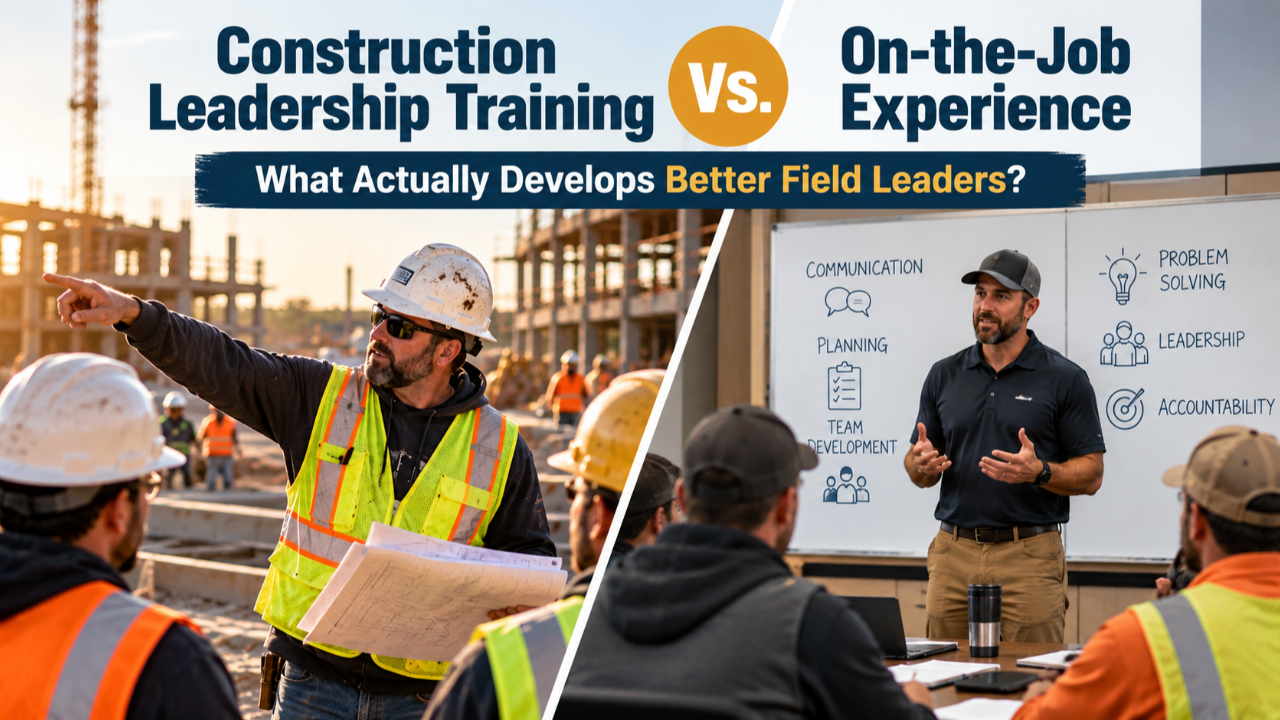
Think about the best foreman you ever worked for. Construction leadership training builds people and planning skills, while on-the-job experience builds the judgment to use them well. Did that foreman learn to lead in a classroom, or through years of tough calls on the jobsite? They likely learned from both.
If you know the work but struggle to lead the crew, that does not erase the skills you've earned. Your new role needs skills no one may have taught you.
The need keeps growing. Construction managers typically learn management techniques through on-the-job training, according to the Bureau of Labor Statistics. It projects 9% job growth from 2025 to 2035 and about 49,700 openings each year. As more tradespeople move into these roles, leaving them to "sink or swim" puts too much at risk.
What On-the-Job Experience Teaches Field Leaders
You remember the days when a late delivery changed the whole plan. Those hard-earned lessons shape how you prepare for the next job. Some are lessons only time can teach. You need to see how the work unfolds on-site to learn them.
- Making sound decisions: You build problem-solving under pressure when weather, site surprises or missing materials affect the work. Over time, you learn how to keep the work safe when plans change.
- Understanding the work: With trade literacy and site awareness, you see how 1 trade's progress affects the next. You also spot what looks good on paper but won't work in the field.
- Earning trust: You gain credibility with the crew when you understand their work and follow through on your word. If they trust you, they're more willing to give extra effort when the job needs it.
- Building good work habits: With practice, you build muscle memory and efficiency. If you use sound methods, those habits help you finish work faster and with fewer mistakes.
Where Experience Leaves Leadership Gaps
Many field leaders get promoted for their technical skills. Yet when they step into their first management role, they must handle schedules, budgets and crew concerns at once.
If your growth path is not systematic, what you learn depends on who leads you. A good mentor explains why a plan works. Without that support, you may copy yelling, rushed decisions or last-minute weekend work because those habits feel familiar.
Skills such as delegation, feedback and accountability need practice and guidance, too. You may know how to do a task well. Yet you might struggle to guide someone who keeps getting it wrong.
At this stage, working harder and putting in more hours can leave you worn out. Your crew may still need help. Your job now includes helping other people do their work well.
What Construction Leadership Training Adds to Field Experience
Good construction leadership development helps close the skills gap on-site between knowing the work and leading the team. It gives rising leaders field-tested methods they can try, review and improve.
Through role playing, you can practice a hard conversation before you need to have it on-site. Then feedback shows you what came across well and what needs work.
Communication, Planning and Crew Support
Each skill should help with a task you face at work:
- Clear work plans: Strong communication and planning skills help you set clear expectations. If the crew knows what to do and has what they need, they can get to work.
- Better crew conversations: With conflict resolution and coaching, you learn to hear concerns and agree on next steps. Emotional intelligence helps you sense when you're upset. You can then pause before you speak to the crew.
- Earlier action: Better time management gives you space to spot issues before they become costly problems. Instead of reacting to crises all day, you can check what tomorrow's work needs.
- Shared expectations: When forepersons, supers and early-career project managers learn together, they can work through the field-office divide. Both groups learn what the other needs to do the job well.
Choosing Training That Reaches the Jobsite
Some construction leadership training programs feel too theoretical or too generic. Once you return to work, they're hard to use. Long off-site workshops can also pull project managers and superintendents away from jobs that need them.
For behavior change that sticks, look for short, practical modules based on real project scenarios. Choose training with leader coaching built in, so you can review what happened after trying a skill.
At Depth Builder, we connect learning to the work your crew does each day. Our live construction training, Sweat Equity Improvement (Jobsite Efficiency & Worker Care), includes 7 virtual sessions of 2 hours each. The program serves PMs, supers and foremen.
Our reported client results include cutting an electrician's task from 208 minutes to 18 minutes. Another example increased panel installs from 23 to 43 panels a day. These results came from specific jobs. Your crew's gains will depend on the work and how they use the skills.
Construction Leadership Training vs. On-the-Job Experience Compared
If you need to choose where to invest, start with the skill your leader needs to build.
| Factor | On-the-Job Experience | Construction Leadership Training |
|
Time to readiness |
Often takes years and depends on the work and guidance available |
Can introduce skills within weeks or months; readiness still needs practice |
|
Main strengths |
Judgment, trade literacy and crew trust |
People skills, planning and communication |
|
Consistency |
Varies with each job and mentor |
Can give leaders a shared method to follow |
|
Cost to consider |
Learning through mistakes can add rework, overtime and turnover |
Fees and learning time need to produce changes on-site |
|
Main risk |
Leaders may repeat poor habits |
Leaders may never apply the lessons |
|
Best use |
Learning how the work happens |
Learning how to guide the people doing it |
Training gives leaders a solid foundation, while experience hones judgment through real decisions. You need leaders who are trained and experienced, so they can put both to use.
The Cost of Leaving Construction Leaders to Sink or Swim
Skipping training may save a fee today, but poor planning can cost you much more across a project.
In September 2026, workforce shortages remained the top reason for project delays, according to the Associated General Contractors of America. Its report also warned that many candidates appear to lack the skills needed. So, the people on your team need support to grow.
Rework, Overtime and Crew Turnover
Rework and lost production grow when trades lack clear plans or work in the wrong sequence. If your crew must redo work, you lose time you may not have.
Burnout and turnover can grow when long hours become the norm. People also need to feel that you hear their concerns. Losing a skilled worker also means losing the job knowledge they carry.
In 1 reported Depth Builder client example, a team changed how it planned forklift work. It went from 4 operators working 60+ hours a week each to 2 operators working 40 hours each. Better workflow reduced the labor hours that task needed.
Mental Health and the Leadership Pipeline
The human cost deserves care beyond project targets. More than 5,000 construction workers die by suicide each year, according to NIOSH. Its September 2026 bulletin reports that construction workers face 5 times the risk of death from suicide as from workplace injury.
Leaders can help people feel safe seeking support, but leadership training does not replace professional mental health care.
Retirements also put pressure on the leadership pipeline. The industry needs an estimated 349,000 net new workers in 2026, according to Associated Builders and Contractors. Its forecast attributes most of that year's new worker demand to retirement. Hiring matters, and so does preparing the people who will guide those crews.
Signs Crew Leaders Need More Support
Years on the tools do not make every part of leadership feel clear. If these patterns sound familiar, your crew leaders may need more support.
- You keep telling crews on Friday to work the weekend because the plan fell behind.
- Your phone rings all day, while trips to the supply house leave planning until late at night.
- Crew members stop sharing ideas because they think you'll treat their concerns as complaints.
- The same problems return each week, and your own communication adds to the strain.
If several signs keep coming back, confusion, conflict and chaos may have become part of the routine. That calls for better support and work habits. At Depth Builder, we help leaders practice planning and communication skills they can use on busy jobs.
Jesse Hernandez's Path From Tradesperson to Field Leader
Depth Builder founder Jesse Hernandez worked as a plumbing journeyman in Texas before moving into leadership. His career included superintendent, general superintendent and regional manager roles with a national general contractor.
As a new super, he knew the work but lacked training for the role. He worked 18+ hour days, pushed his crew hard and still struggled with the schedule and budget.
As Jesse improved his planning, crew communication and mindset, he gained more control of the work. He could get ahead of the schedule and give his crew some weekends off. Those field lessons now guide how Depth Builder trains leaders.
How to Combine Leadership Training With Jobsite Experience
The jobsite gives people a place to practice, while training gives that practice direction. If you promote from within, connect both from the start to build a pipeline of strong field leaders.
Steps for Contractors
- Prepare for the next role: Build a field-to-office bridge before someone takes on roles of greater responsibility. Show how field choices affect budgets, schedules and other trades.
- Make guidance part of the job: Pair new leaders with experienced mentors and support them with construction supervisor training. They then have someone to turn to if they need help.
- Start support early: Give frontline supervisors training when they move into the role. If you wait until the job goes wrong, learning gets harder.
- Recognize good leadership: Promote based on results and trust, including how people treat their crews. A clear path helps with employee engagement. It also shows next-generation leaders how they can grow with your firm.
Steps for Field Leaders
Start to learn the office language, including budgets, schedules and constraint logs. These logs track what blocks the work. This helps you manage up by explaining what your crew needs and why it matters.
Build weekly planning into your routine, then review what worked with your super or PM each Friday. As you keep learning on the job, watch how seasoned leaders handle setbacks and seek feedback on your own choices.
Time with like-minded leaders also gives you room to share concerns. You don't have to face each problem alone.
For trade foremen and superintendents, our self-paced online course, Field Leaders Planning Toolbox (Construction Leadership Essentials), offers 5 modules. They cover planning, clearing obstacles and preparing for the work ahead.
If you want ongoing support with communication and leadership challenges, join our monthly peer group, Emotional Bungee Jumpers (Construction Communication Training).
Build Field Leaders Who Can Guide the Crew
Your best tradespeople deserve more than a new title and the hope that they will figure everything out. With leadership training for construction managers, they can learn to plan work and support their crews. That helps them lead with confidence.
At Depth Builder, our construction leadership training fits around active projects and focuses on real field needs. Ready to help skilled builders become leaders their crews trust? Contact Depth Builder to find the right fit among our construction training programs.
FAQs
1. Is on-the-job experience enough to become a good construction leader?
Experience builds judgment and crew trust, especially if you have a good mentor. Focused training adds guided practice in planning, feedback and conflict skills, so you depend less on trial and error.
2. Why do construction managers need leadership training?
Knowing a trade does not teach you how to handle every crew concern. Training helps you guide the crew, share tasks and deal with issues before they grow.
3. What skills does construction leadership training cover?
Common topics include communication, time management, delegation, planning and coaching. At Depth Builder, we also help leaders clear obstacles that slow their crews, using tasks they face on real projects.
4. How long does it take to become a construction superintendent?
There is no fixed timeline, although many spend years in the trades or as foremen first. To become a construction superintendent, build field knowledge and leadership skills that match the employer's needs.
5. Can leadership training work without pulling managers off the jobsite?
Yes, virtual sessions and self-paced courses reduce the need to travel for training. You still need time to learn, but you can apply each lesson during your normal project work.