
Construction Foreman Training: A Practical 90-Day Plan
Sep 21, 2026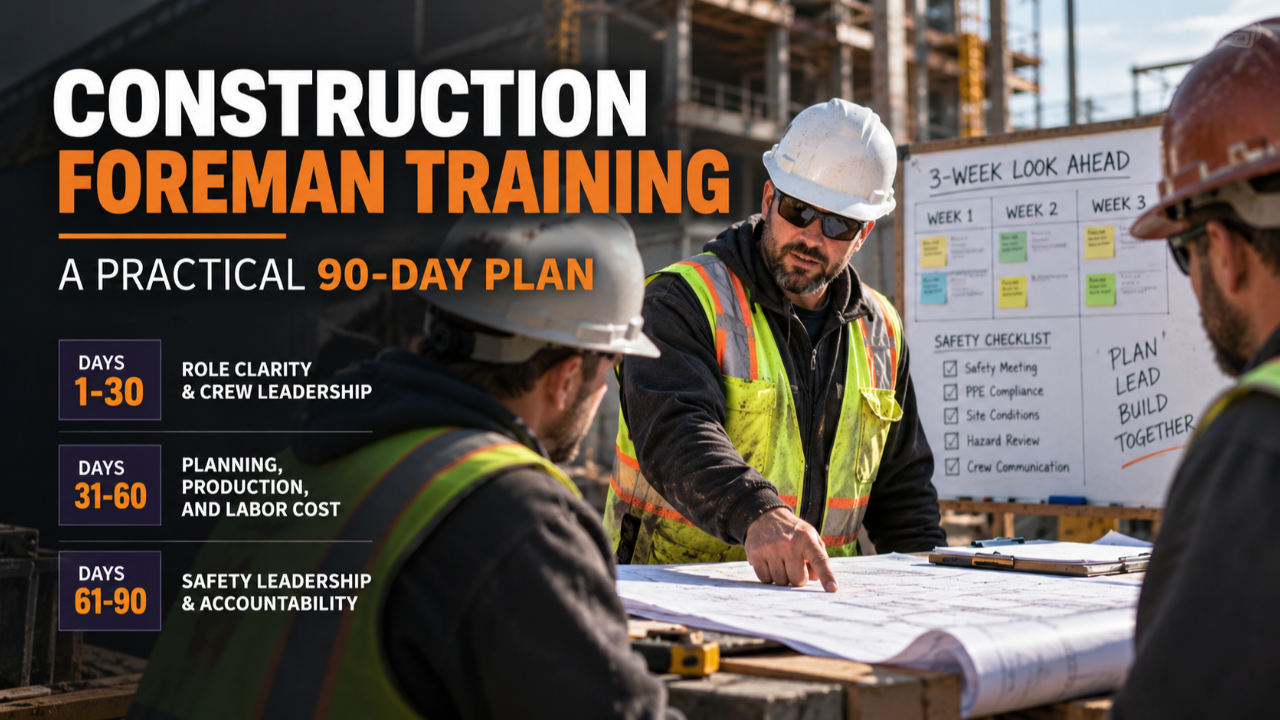
You promoted your best hand on Friday, and by Monday they are running the crew, but who trains them? Construction foreman training can follow a 90-day plan that builds role clarity, planning skills, cost awareness, and safety leadership.
For a newly promoted crew leader, the first month makes the role clear. The next builds planning and scheduling habits, while the third gives them more work to lead with support. Safety starts on day 1 and stays part of each phase.
The Bureau of Labor Statistics projects 9% growth in construction manager jobs from 2025 to 2035, with about 49,700 openings each year. These figures cover managers, rather than foremen alone. Still, they show why firms need to help more people learn to lead.
Why New Foremen Need Structured Training
A skilled craftsperson knows how to do the work. Leading the people doing it takes another set of skills. Without formal supervisory training, that promotion can feel like sink or swim.
Your foreman now guides work that affects estimating, schedules, quality, safety, and labor productivity. If foreman capacity falls short, the whole crew feels it:
- Your overtime grows because the crew keeps catching up on work no one planned ahead.
- Rework grows if people start a task without clear quality requirements.
- Apprentices may leave if they hear what went wrong but get little coaching or structured feedback.
- Missed inspections leave more work on the punch list, adding costs near closeout.
At Depth Builder, we focus on construction leadership training because we know how hard that change can feel. Jesse Hernandez started as a tradesman before becoming a superintendent, general superintendent, and regional manager for a national general contractor.
Days 1 to 30: Foreman Responsibilities and Crew Leadership
Start your foreman training program with the work they will face this week. Leadership theory has its place, but first show the foreman which calls they can make on their own.
Build a New Foreman Checklist
A truck, keys, and a crew do not complete onboarding. Instead, sit down with them and work through what the role involves:
- Decision limits: Write down what the foreman owns and what the superintendent must approve, so neither has to guess.
- Schedule and contacts: Mark their trade's tasks and explain who can help if work falls behind.
- Project records: Show how daily jobsite documentation works, with sample reports, RFIs, and change orders. Explain who checks and approves each item.
- Mentor support: Pair them with an experienced general foreman who can take their calls throughout the 90 days.
You can draft the checklist in about 1 hour, then work through it on site. If mentoring new foremen falls to an internal mentor, protect time for those meetings. Support only helps if they can reach the person when they need them.
Support the Peer-to-Leader Transition
The people who worked beside you last week now expect you to assign their work. That can feel awkward if a friend questions your call in front of the whole crew.
During the peer-to-leader transition, explain what has changed and which rules the whole crew must follow. You can stay friendly and still be fair when you assign work. If someone disagrees, hear them out while keeping the same rules for all.
Our Emotional Bungee Jumpers (Construction Communication Training) offers a monthly peer group for these conversations. Field leaders bring real job site problems, so they can work through issues they face with their crews.
Days 31 to 60: Planning, Production, and Labor Cost
By month 2, help the foreman look beyond today's work. If materials arrive late or another trade blocks access, the crew needs a plan before work stops.
Use a 3-Week Look-Ahead Schedule
Reading and interpreting blueprints helps the foreman understand the work. A 3-week look-ahead schedule shows what needs to be ready before the crew can start. That includes people, materials, and access to each work area.
Practice these 4 steps across the month:
- Read the schedule: Find the crew's tasks and review float. This means how long a task can slip without pushing back the milestone it affects.
- Flag constraints: List what could stop work, such as missing materials, unclear drawings, or blocked access. Then name who will deal with it.
- Track materials: Review needs 1 to 2 weeks ahead, but order long-lead items much earlier. Check what is on site before placing orders.
- Plan work areas: Help the foreman sequence work areas so crew skills and task order fit the plan. Check that each trade has room to work.
If a constraint remains open, bring it to the superintendent before the crew loses time. Then update the plan together.
Our Field Leaders Planning Toolbox (Construction Leadership Essentials) includes a 10 Minute Planner, 1 Week File, 6 Week File, and Pull Plan Prep. At $99.99, this self-paced online construction foreman training can support a foreman development program with a modest budget.
Connect Labor Cost to Daily Production
Start with fully burdened labor cost, which includes wages plus employer costs such as taxes, insurance, and benefits. Use your firm's own burden, because each rate can differ.
For example, if burden adds 25% to 40%, a $38-per-hour journeyman costs $47.50 to $53.20 per hour. At about $50, an idle hour costs more than the wage alone suggests.
Next, set a daily production target and check hours worked against budget hours. If the crew falls short, find out why before adding overtime. Missing tools, poor access, or rework may explain the gap better than crew size.
Days 61 to 90: Safety Leadership and Accountability
This phase builds on safety habits from day 1. Field leadership training helps the foreman take charge of more work as their skills grow. Keep a mentor close, so they still have help when they need it.
Strengthen Safety Compliance and Documentation
Under OSHA's accident prevention responsibilities, employers must arrange frequent and regular inspections through competent persons they designate. These inspections cover job sites, materials, and equipment. The title alone does not make a foreman fit for that duty. They must know how to spot hazards and have the authority to fix them promptly.
In fiscal year 2025, OSHA ranked fall protection general requirements 1st among its most cited standards. Ladders ranked 3rd, while scaffolding ranked 6th.
NIOSH also reports that employers with fewer than 20 employees accounted for 75% of fatal falls during 2015 to 2017. They represented 39% of construction payroll employment. Though these figures come from past years, they show why small crews need safety plans too.
Build safety compliance and documentation into daily work:
- Toolbox talks: Cover the day's hazards, then give the crew time to share concerns before work starts.
- Job Hazard Analysis: Before non-routine work, review the steps, hazards, and controls with the people doing the task.
- Incident reporting: Report incidents and near misses promptly so the team can act. Follow the firm's rules and meet any required reporting deadlines.
- Consistent standards: Apply OSHA standards to the whole crew, including friends and those who have worked there for years.
Practice Conflict Resolution and Fair Accountability
If work falls below the agreed standard, speak in private while the details remain clear. Hear what happened, agree on how to fix it, and write down the key points that day.
Conflict resolution and progressive discipline need practice too. Follow company policy and get help from the manager if the issue goes beyond the foreman's role.
If someone needs to redo work, show them what needs to change and coach them through it. When you fix each mistake yourself, they lose the chance to learn.
90-Day Foreman Training Plan
| Phase | Training focus | Signs of progress |
| Days 1 to 30 | Role clarity, crew leadership, and safety basics | Crew understands responsibilities; mentor meetings happen |
| Days 31 to 60 | Look-ahead planning, production, and cost | Foreman prepares a look-ahead and tracks daily targets |
| Days 61 to 90 | Stronger safety leadership and accountability | Foreman leads toolbox talks and handles issues within their authority |
Construction Foreman Certification and Training Requirements
Construction foreman certification can help people grow, but the rules differ by trade and program. Before you enroll, check the course hours, tests, and rules for journey-level experience.
Choose construction foreman classes that build the skills your crew needs on site. If planning causes problems, start there. Construction supervisor training can run alongside the 90-day plan; you do not have to wait until it ends.
OSHA 30-Hour Construction helps people with safety duties learn more about hazards. However, it leads to a course completion card, rather than foreman certification. You still need the safety training that applies to the work you do. Follow OSHA's Outreach guidance and any local or project requirements when choosing the timing.
How to Review Foreman Progress at Day 90
Look at daily habits as well as finished work. If the foreman still struggles, use the review to find out where they need more help.
|
Signs they need support |
Signs training is helping |
|
Waits for direction and learns about delays late |
Plans crew huddles and raises problems early |
|
Reacts to shortages after the crew stops |
Checks materials and labor needs ahead of time |
|
Avoids safety corrections to prevent conflict |
Models PPE compliance and applies consistent standards |
|
Quietly repairs everyone else's mistakes |
Coaches the crew, documents issues, and checks corrections |
Our Sweat Equity Improvement (Jobsite Efficiency & Worker Care) helps contractors examine how work happens. Reported client results include cutting an electrician's task from 208 minutes to 18 minutes and increasing panel installation from 23 to 43 per day. These results come from those jobs, so track your own work to see what changes.
Common Mistakes in Foreman Development
Even good crew leader training falls short if the foreman has no time to use it. Watch for these problems:
- Promotion without support: Trade skills earn the title, but the firm offers no foreman leadership training once the role starts.
- No planning time: If the foreman stays on the tools all day, tomorrow's plan waits until after work.
- Constant crew changes: Weekly changes make it harder to build trust and learn how people work together.
- Little respect for the role: Moving frontline supervisors from crew to crew with no handover leaves them struggling to lead.
For support as skills grow, our Construction Leadership Lab offers support beyond a single class. The described $20-per-month membership serves trade contractors, GCs, and owners' reps. Before you join, confirm the current price, monthly book study, and accountability call schedule.
Build a Consistent Construction Foreman Training Process
A lack of training can show up in overtime, turnover, and skilled people who no longer want to lead. If your next foreman starts soon, give them a clear role, a mentor, and time to plan.
You can begin a 90-day plan without a training department. What matters is following through when the job gets busy and reviewing progress together.
Depth Builder training programs support PMs, supers, and forepersons. If someone moves into a crew leader role this quarter, talk to Depth Builder about a plan that fits your projects.
Frequently Asked Questions
1. How Long Does Construction Foreman Training Take?
An in-house plan can run for 90 days, with coaching after that. Course length depends on what it covers and who teaches it. If you take classes while leading a crew, leave time to put each skill to use.
2. What Qualifications Do You Need to Be a Foreman?
Each employer and trade sets its own needs. Field experience, crew leadership skills, and knowledge of OSHA standards matter. Check the trade license and project rules where you work too, because a course certificate does not replace them.
3. Can You Train a Foreman Without a Training Budget?
Yes, you can start foreman training in construction with an in-house mentor and tools you already use. However, plan for paid time to learn. Depth Builder's $99.99 planning toolbox offers an option under $100 if you need added resources.
4. What Is the Difference Between a Crew Leader and a Foreman?
A crew leader tends to guide a small group through a task or work area. A foreman often has more planning, safety, and reporting duties, though titles vary. The foreman and superintendent roles also differ in scope.
5. Should New Foremen Get OSHA 30 Before or After Promotion?
Training before the new role starts can help. Still, local rules, employer policies, and project needs set the deadline. If they take it later, book it promptly. Give workers the required training before they face hazards, rather than waiting for days 61 to 90.