
What Does a Construction Superintendent Do? Daily Duties & Responsibilities
Jul 22, 2026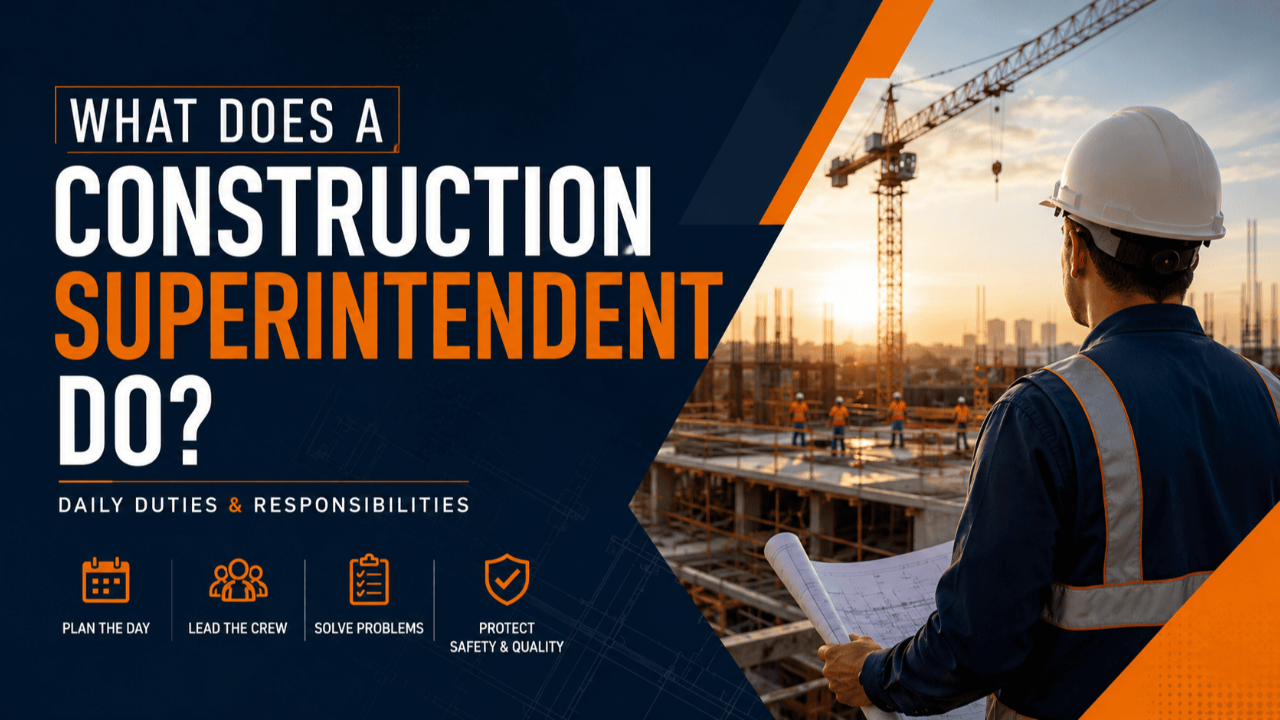
What does a construction superintendent do? They run the day-to-day operations that keep a construction site moving. They control the short-term schedule, guide the crews, solve field problems, and make sure every trade works in the right order.
On most commercial projects, the construction superintendent is the highest-ranking person on site. The office may handle contracts, budgets, and client communication, but the super handles what happens at the jobsite. That includes the people, materials, weather, deliveries, drawings, safety, and the surprises that show up without warning.
The work also carries real opportunity. The Bureau of Labor Statistics reports a median annual wage for construction managers of $106,980, with 9% projected growth through 2034 and about 46,800 openings each year.
What Is a Construction Superintendent?
A construction superintendent may also be called a site superintendent or project superintendent. Their job is to turn project blueprints, plans and specifications, and the master schedule into real field execution.
The project manager usually owns the administrative side of the project. The superintendent owns the construction site. They keep the subcontractor teams aligned, protect safety and quality control, and make decisions fast when the day plan no longer matches the jobsite.
On a larger project, several supers may work under a general superintendent. One may lead structure, another interiors, and another site work. An assistant superintendent often supports the work by handling inspections, documentation, or a defined area of the project.
A Construction Superintendent’s Day, Gate to Gate
A construction superintendent job description can list the roles and responsibilities, but it rarely shows how the day actually feels. The job runs in a sequence. Each part of the day sets up the next.
Morning: First Through the Gate
Most supers are first through the gate. Before the crews arrive, they walk the site and assess conditions. This quiet site walk matters because it gives them a clear view before phones ring and questions start coming from every direction.
They check for security issues, weather damage, or materials dropped in the wrong laydown area. Then they compare the site to the day plan. If concrete work needs access through a corridor that now holds a delivery, they fix that problem before it turns into a delay.
The morning worker huddle gives everyone the same priorities. Good supers run daily morning meetings with the subcontractors and foreman, explain the work sequence, flag site-specific hazards, and settle questions early.
Morning work often includes:
- Confirming the crew count and planned scope of work.
- Checking materials before installation.
- Reviewing deliveries with suppliers.
- Making sure trades working in adjacent areas will not block each other.
- Setting the first move for each crew.
Midday: Progress, RFIs, and Field Decisions
By mid-morning, the schedule meets reality. The construction superintendent moves through zone control walks, another site walk, and direct conversations with the crews. They tracks progress, answers questions from crews, and watch for work that could create a problem for the next trade.
This is when RFIs in the field matter. If the drawings conflict with existing conditions, the super does not let a crew guess. They send a request for information to the design team, document the issue, and protect the work from being built wrong.
Materials also need constant attention. Inventory checks tell the super what is available, what is missing, and what could become a late delivery. They stay close to suppliers because one late delivery can leave a full crew waiting with no productive work.
They also check approved submittals and shop drawings before installation. Finding a mismatch on paper takes minutes. Finding it after a wall closes can cost days.
When the job gets tight, our Field Leaders Planning Toolbox (Time Management for Construction) gives field leaders practical support for Weekly Planning, Managing Constraints, and Prepping for a GC’s Pull Plan. Depth Builder made these training programs self-guided because supers rarely have an open afternoon for a classroom.
End of Day: Tomorrow Starts Before Today Ends
The last hour of the day protects tomorrow. The super walks the work again, checks what actually got built, and confirms the sequence for the next day with the foreman and subcontractor teams.
They complete daily logs while details remain fresh. Those logs should cover headcount, weather, incidents, deliveries, work completed, and anything that affected production.
End-of-day inspections help them catch deficiencies while the responsible crew is still on site. They update the look-ahead, hold a short staff debriefing, and resequence work when a new constraint appears.
A strong closeout routine includes:
- Daily logs with real field details.
- End-of-day inspections for quality and safety.
- Clear priorities for the next morning.
- A two- to three-week look-ahead that reflects current conditions.
- Quick action when a constraint threatens flow.
Core Construction Superintendent Responsibilities
Schedule Control
Supers build and maintain lookahead schedules, a short-interval schedule, and a three-week lookahead that crews can actually follow. They sequence work so trades do not interfere with each other. When one activity slips, they resequence the next activities before a small delay becomes a major one.
Our Takt planning guide explains how takt can create more reliable flow across the jobsite.
Safety Leadership and Quality Control
Safety is not a morning speech. The super leads toolbox talks, reviews site-specific hazards, follows OSHA standards, and must stop work when conditions are unsafe. OSHA’s Recommended Practices for Safety and Health Programs puts management leadership at the center for a reason.
Quality control means checking work against the project blueprints, plans and specifications, and approved shop drawings. Supers coordinate third-party and code inspections, manage the punch list, and guide the project through project closeout toward the certificate of occupancy.
Coordination and People Management
The superintendent is the eyes and ears of the general contractor in the field. They lead meetings with subcontractors, report progress in OAC meetings, and hold subs to what they committed to.
When a subcontractor cannot meet the plan, the super must escalate early. When subcontractor conflicts arise, they need to settle the issue without losing the schedule or the trust of the crew. Our guide to managing a crew covers the leadership side that new supers often need most.
Superintendent vs Project Manager vs Foreman
|
Role |
Where they work |
What they own |
|
Project manager |
Mostly office and meetings |
Budget, contracts, procurement, and client communication |
|
Superintendent |
On site every day |
Field execution, safety, quality, and the short-term schedule |
|
Foreman |
On site with the crew |
One trade, one crew, and daily production |
The superintendent vs project manager question is simple: the project manager owns the administrative side, while the super owns the field. In superintendent vs foreman terms, the foreman leads one scope of work and the foreman reports to the superintendent. The superintendent coordinates every trade across the project.
If you are starting that path, becoming a foreman is often the first real step.
Career Path, Qualifications, and Pay
Most supers come through the trades. A university degree is usually not required for superintendent work, though a degree in construction management can help with larger companies and upper management roles.
Many commercial general contractor teams look for 5 to 10 years of field experience, strong blueprint reading, and real knowledge of construction methods and sequencing. The OSHA 30-hour certification is also a major expectation on commercial work.
Pay changes with project size, location, and responsibility. Major markets often run above national averages. Still, the certifications only open the door. Leadership, planning, and accountability keep you effective after you get the job.
Our guide to construction superintendent skills shows what separates a dependable super from an exceptional one.
What the Superintendent Job Description Leaves Out
The hard part is not the task list. It is carrying full responsibility with borrowed authority. You may not employ the subs or control every supplier, but the job still lands on you when production slips.
AGC’s 2026 outlook found that 80% of firms struggled to fill salaried openings, while 53% named worker quality as a major concern. That is why construction leadership matters.
Jesse Hernandez worked in ditches in Texas and as a plumbing journeyman before building Depth Builder. Our training programs focus on the field leaders who earned promotions through output, then found themselves leading people, schedules, and conflict. The Self-First Framework helps supers protect time for the work that moves the job instead of reacting all day.
The Real Job: Create Order Every Day
The gate opens whether you feel ready or not. The crew does not need a perfect speech. They need a clear plan, honest direction, and someone who can keep the work moving when conditions change.
If your supers feel buried in documentation, curveballs, and long hours, that is not a character flaw. It is a construction leadership gap. Send us a message and the Depth Builder team will tell you straight whether we can help.
Frequently Asked Questions
1. What are a construction superintendent’s daily duties?
They open the site, walk the site, lead the morning huddle, coordinate trades, manage RFIs, inspect quality, complete daily logs, and prepare tomorrow’s work.
2. Is a superintendent higher than a foreman?
Yes. A foreman leads one crew or trade. The superintendent coordinates the crews, trades, schedule, safety, and quality across the full project.
3. What hours does a construction superintendent work?
Most arrive around 6:30 or 7:00 a.m. and finish after crews leave. Long hours are common during critical project phases.
4. Do you need a degree to become a construction superintendent?
No. Field experience often matters more. A degree can help, but strong construction knowledge, safety training, and proven leadership carry real weight.
5. What is the hardest part of the role?
Holding people accountable without direct authority. Documentation and scheduling are learnable. Managing people, conflict, and time takes practice.